One condition for groups of individuals to be able to live together in one society is that they share a set of morals and values. Fortunately for the religious people of Islamic Spain, the morals and ethics of Judaism, Christianity, and Islam are very similar.
The most basic set of moral and ethical values in the Biblical tradition is the Ten Commandments. The Ten Commandments were part of the revelation taught by Moses. Both Jews and Christians revere these laws, which appear in both the Torah and the Old Testament. These beliefs are an important reason why Muslims are taught to respect Jews and Christians as fellow “People of the Book.”
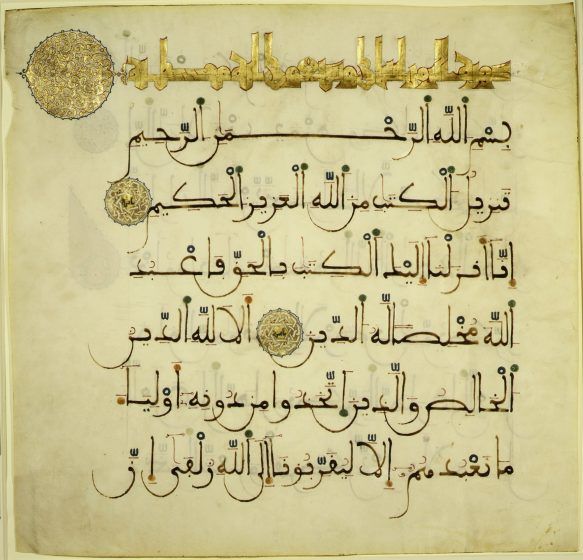
The Quran includes all of the Ten Commandments — many of them stated in a similar way, with the exception of the Sabbath (day of rest). The Quran also states that its revelation came to confirm the message brought by earlier prophets.
Much of this message is the central religious concept of One God, and the basic commandments to honor parents, help the poor, respect neighbors, and to not steal, kill, envy, or lie. Some of these commandments also form the basis of civil and criminal law in secular governments. And they form the basis for the concept of human rights.
Rules about food are another type of religious practice that can affect how a religiously diverse group gets along. Jews and Muslims both follow dietary laws about the types of meat they can eat, as well as how animals used for meat are slaughtered and prepared. Christians do not follow either the very detailed Jewish laws about food, nor the Islamic laws that forbid eating pork and drinking alcoholic beverages.
However, Jews, Christians, and Muslims do share food in social settings and among members of religiously mixed families.
The sharing of food serves as an important basis for social life in a diverse society. Sharing food lends itself to the sharing of ideas. And, shared values, beliefs, morals, and ethics of the Abrahamic religions make many kinds of interactions possible, from business dealings to intermarriage. Examples of these kinds of interactions existed in Medieval Spain, and continue today in the mixed cities of Muslim lands, or in other large cities of the world.
Learn more about the shared morals and ethics of Judaism, Christianity, and Islam here.